


Magnetic Stands for indicator
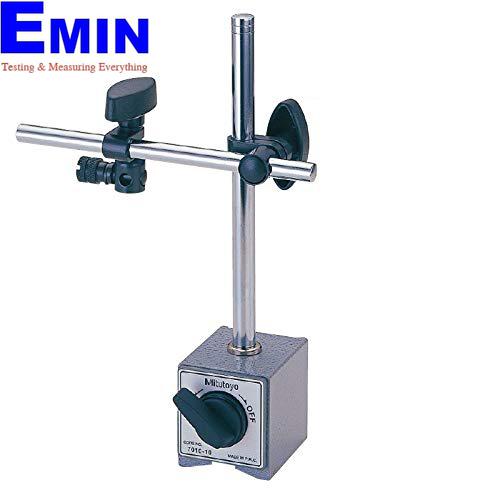
Stable indicator positioning is essential when checking runout, flatness, parallelism, or small dimensional changes on machined parts. In many inspection and workshop setups, the quality of the stand affects not only convenience, but also the repeatability of the measurement itself. A well-chosen magnetic stand for indicator helps keep the measuring point steady while allowing the operator to adjust the indicator quickly and accurately.
Why magnetic stands matter in precision measurement
Magnetic stands are widely used to hold dial indicators, digital indicators, and dial test indicators on ferrous surfaces such as machine tables, fixtures, and metal frames. Their main role is simple but critical: provide a secure base and an adjustable arm so the indicator can be positioned at the correct contact point without unwanted movement.
In day-to-day inspection work, this makes setup faster and more consistent. Compared with improvised mounting methods, a dedicated stand improves access to difficult measuring points and reduces the risk of drift caused by poor clamping or unstable support.
Common types in this category
Although the category centers on magnetic stands, there are several practical formats within this group. Basic magnetic indicator stands are designed for general-purpose measurement and typically focus on rigidity, simple locking, and compatibility with common indicator mounting styles.
Other versions add fine adjustment, which is especially useful when bringing the indicator tip into contact with a surface at the exact measuring position. Articulating and flexible-arm models provide more freedom of movement, while comparator-style stands are better suited to bench inspection tasks where a controlled measuring surface and vertical movement are more important than magnetic attachment.
Representative products and typical use cases
Several products in this range illustrate how different stand designs support different inspection needs. The MOORE & WRIGHT MW470-01 Magnetic Indicator Stand is a straightforward option for users who need a rigid magnetic base for routine checks, while the MOORE & WRIGHT MW475-01 Magnetic Indicator Stand adds fine adjustment for easier positioning in tighter tolerance work.
For applications that require more flexible arm movement, the MOORE & WRIGHT MW477-01 Articulating Magnetic Base offers multi-angle adjustment, and the MOORE & WRIGHT MW496-01 Flexible Magnetic Base is useful where access around fixtures or irregular machine geometry is limited. If a ready-to-use setup is preferred, sets such as the MOORE & WRIGHT MW475-SET1 and MW475-SET2 combine a magnetic base with an indicator, which can simplify purchasing for maintenance, quality control, or workshop inspection stations.
Users looking for other established measuring brands can also explore MOORE & WRIGHT and MITUTOYO options within the broader measurement portfolio. For example, the MITUTOYO 7032-10 Magnetic Stand is intended for common indicator stem sizes, making it suitable for many standard comparison and alignment tasks.
Magnetic stands, surface gauges, and comparator stands
These tools are related, but they are not identical. A magnetic stand is built around a magnetic base that attaches to a metal surface and holds an indicator in position. This makes it useful on machine tools, fabrication benches, and inspection fixtures where portability and quick setup are important.
A surface gauge, such as the MOORE & WRIGHT E101B or E102B, is typically used for marking out or measurement work on a surface plate, where the emphasis is on a stable base sliding across a reference surface. A comparator stand, such as the Niigata Seiki WCC-80 Ceramic Comparator Stand, is more focused on controlled vertical movement and repeatable bench measurement. If your application requires the measuring instrument itself, you may also need matching dial indicators or a digital indicator depending on the reading method and resolution you prefer.
How to choose the right stand
The best selection depends on the measurement environment and the indicator you plan to mount. Start with the base: holding force matters if the stand will be mounted vertically, on machine frames, or near vibration. Some models in this category emphasize stronger magnetic force, while others focus more on adjustment flexibility.
Next, consider arm style and mounting compatibility. A rigid stand is often preferred for repeatable shop-floor checks, while an articulating or flexible arm helps when the contact point is awkward to reach. It is also important to confirm the accepted stem diameters or mounting style of the indicator, especially if you work with different brands or alternate between dial, digital, and test indicators.
Fine adjustment should not be overlooked. For quick comparative checks, a basic stand may be enough. For closer setup control, especially when zeroing an indicator against a reference surface, a stand with fine positioning can save time and reduce operator frustration.
Typical applications in workshops and quality control
Magnetic indicator stands are used across machining, toolmaking, maintenance, and incoming inspection. Typical tasks include checking spindle or shaft runout, verifying flatness on machined faces, aligning machine components, comparing part heights, and monitoring small displacement during assembly or repair.
Because they can be moved easily between workstations, they are practical for both fixed inspection points and mobile troubleshooting. In maintenance environments, a compact magnetic base can be especially useful for quick checks on motors, rotating assemblies, and machine slides without requiring a dedicated measuring bench.
Brands commonly considered in this category
This category includes products associated with well-known metrology and measuring tool brands. MOORE & WRIGHT appears strongly in the range with standard stands, magnetic bases, and combined stand-and-indicator sets. MITUTOYO, Niigata Seiki, and TECLOCK are also relevant names for users comparing mounting style, holding power, and application fit.
For example, TECLOCK MB-B and TECLOCK MB-1050 magnetic bases reflect a practical approach for indicator mounting, with the latter geared toward easier adjustment. Brand choice often comes down to preferred design, mounting compatibility, and the type of measurement work already established in your facility rather than marketing claims alone.
Final considerations before buying
Before choosing a stand, think about where it will be used, how often it will be repositioned, and whether your priority is rigidity, reach, or ease of adjustment. A simple magnetic stand can be ideal for routine inspections, while an articulating base or complete indicator set may be a better fit for more varied measurement tasks.
For buyers sourcing equipment for production, maintenance, or QC departments, the most useful approach is to match the stand to the indicator type, mounting surface, and inspection method already in use. With the right setup, magnetic stands become a dependable part of a broader measurement system rather than just an accessory.
-
-
-
-
-
-
-
-
-
-
-
-
-
-
-
-
-
-
-
-
-
-
-
-