


Cable Fault Tester Repair Service
When a cable fault locator or cable fault tester starts giving unstable results, the impact reaches far beyond one instrument. Field troubleshooting slows down, fault distance estimates become less reliable, and maintenance teams may spend more time isolating problems on medium- and low-voltage cable networks. A professional Cable Fault Tester Repair Service helps restore measurement confidence so diagnostic work can continue with less downtime and less uncertainty.
Repair support for this type of equipment is especially important because cable fault testing often combines several functions in one platform, such as fault pre-location, route tracing, insulation evaluation, and surge-based fault pinpointing. When any part of that chain is affected by drift, component failure, display issues, charging faults, or communication problems, the entire workflow can suffer.
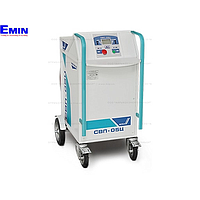
Why cable fault tester repair matters in practical maintenance work
In power distribution, industrial plants, utilities, infrastructure projects, and service operations, cable fault testers are used to reduce fault-finding time and avoid unnecessary cable replacement. These instruments support maintenance teams in locating open circuits, short circuits, insulation breakdown, and other cable-related issues with greater precision than manual trial-and-error methods.
Because of that role, repair is not only about making the unit power on again. It is also about restoring measurement integrity, functional safety, and dependable operation in the field. A repaired unit should be able to support real troubleshooting conditions, where repeatability, signal stability, and dependable operation are often more important than cosmetic condition alone.
Common issues seen in cable fault testing equipment
Symptoms can vary depending on the tester architecture and the functions built into the instrument, but many service cases begin with inconsistent readings, charging problems, intermittent output, damaged connectors, failed displays, battery issues, or software and control faults. In some situations, users notice that fault location results differ from previous field experience, even when the cable conditions appear similar.
Another common concern is degradation after heavy transport or repeated outdoor use. Cable fault testers are frequently deployed across substations, plant areas, trenches, and roadside environments, so mechanical stress, moisture exposure, and wear on ports or leads can contribute to failure over time. Where testing also involves high-voltage or pulse-based functions, wear in protection or output-related circuits may need careful inspection.
What a professional repair process should focus on
A structured service approach generally starts with fault diagnosis at both the functional and component level. This means identifying not just the visible symptom, but also the root cause behind unstable operation, failed outputs, communication errors, charging faults, or abnormal measurement behavior. For complex test instruments, this step is essential to avoid short-term fixes that do not resolve the original problem.
From there, the repair process may include replacement of failed parts, board-level corrective work, connector restoration, power section repair, display or interface recovery, and verification of overall operation. For cable fault testers, attention should also be given to signal generation, response consistency, and whether the instrument behaves correctly across its intended test functions after repair.
In many maintenance environments, it is also useful to evaluate whether the instrument should proceed to calibration or broader performance verification after repair. If your service workflow includes other electrical diagnostic tools, related support options such as low resistance meter repair may also help keep the wider test fleet in working order.
Repair considerations for different operating environments
The demands placed on cable fault testing equipment can differ significantly by application. Utility and infrastructure teams may prioritize rugged field reliability and stable operation over long cable runs, while industrial maintenance teams may focus on faster troubleshooting during shutdown windows. Contractors may need dependable transport readiness, battery health, and quick recovery from connector or accessory-related faults.
These differences affect how repair work should be evaluated. A unit used only occasionally in controlled conditions may need a different level of restoration than one that sees frequent outdoor deployment. For this reason, service decisions are often best made with the actual use case in mind rather than treating every failure as a generic bench repair issue.
When to repair instead of replace
Replacement is not always the most practical response when a cable fault tester develops a fault. If the platform remains appropriate for your test procedures and the core hardware can be restored effectively, repair may be a sensible option for controlling cost, preserving technician familiarity, and reducing interruption to established workflows. This is especially true when teams rely on known operating methods and documented procedures built around existing instruments.
Repair can also make sense when the issue is isolated to power, interface, display, charging, or specific functional sections rather than the entire system. In mixed fleets of electrical test equipment, organizations often review the condition of adjacent instruments at the same time. For example, service planning may also include withstand voltage tester repair where insulation and high-voltage test workflows are part of the same maintenance program.
How this service supports broader electrical test reliability
Cable diagnostics rarely happen in isolation. Maintenance and commissioning teams often use multiple instruments to confirm cable condition, insulation behavior, continuity, and system status before deciding on repair or replacement in the field. As a result, dependable service support for one device helps maintain continuity across the broader electrical testing process.
Where troubleshooting overlaps with switching equipment or protection systems, some organizations also review adjacent service needs such as breaker testing equipment repair. In other cases, insulation-focused workflows may benefit from support for insulating materials tester repair. These related services help maintain consistency across the test environment without forcing all issues into a single repair scope.
Choosing a cable fault tester repair service
When evaluating service options, it is worth looking beyond a simple pass/fail repair outcome. A strong repair process should address the reported symptom, investigate underlying causes, and confirm that the tester can return to practical field use with dependable behavior. Documentation, clear fault reporting, and post-repair functional checks are also important for maintenance records and future planning.
It is equally helpful to consider turnaround expectations, the condition of accessories and interfaces, and whether the unit may require further verification before redeployment. For organizations that depend on cable diagnostics to reduce outage time or accelerate maintenance response, the real value of repair lies in restoring usable, trustworthy performance rather than only restoring power or basic display function.
Supporting long-term usability of cable fault test equipment
Good repair strategy is part of long-term asset management. Repeated transport, environmental exposure, aging electronics, and field handling can all affect reliability over time, so timely service helps prevent minor faults from becoming larger failures. It also gives maintenance teams a better basis for deciding whether to continue using, rotate, or retire a particular instrument.
If your cable fault tester is showing unreliable operation, intermittent faults, or reduced diagnostic confidence, a focused repair assessment can help determine the most practical next step. With the right service approach, the instrument can often return to supporting efficient cable troubleshooting, more consistent test results, and smoother day-to-day maintenance work.
-
-
-
-
-
-
-
-
-
-
-
-
-
-
-
-
-
-
-
-
-
-
-
-