


Withstand Voltage Test Repair Service
When a withstand voltage tester starts producing unstable readings, nuisance trips, or output issues, routine production checks and safety verification can slow down quickly. In many industrial and laboratory environments, these instruments are used to confirm insulation integrity and dielectric strength, so even small performance deviations can affect test reliability, compliance workflows, and operator confidence. A professional Withstand Voltage Test Repair Service helps restore dependable operation while reducing the risk of inaccurate pass/fail decisions.
Whether the equipment is used in electronics manufacturing, appliance testing, cable inspection, or quality control, repair work should focus on both functional recovery and measurement stability. The goal is not only to get the instrument powered on again, but to return it to service in a condition suitable for demanding electrical test tasks.
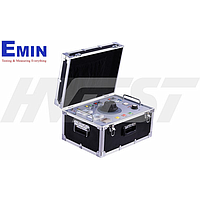
Why repair matters for withstand voltage testing equipment
Withstand voltage testing places equipment in a critical role within electrical safety verification. These testers are commonly used to apply a specified high voltage between conductors or between conductive parts and ground in order to detect insulation weakness or breakdown. Because of that function, even minor faults in the tester itself can create misleading results, interrupted test cycles, or unnecessary rejection of acceptable products.
A proper repair process helps address issues such as erratic output, failed startup, damaged interfaces, alarm malfunctions, unstable test timing, or inconsistent voltage application. In practice, restoring a tester involves more than replacing obvious failed parts. It also requires checking the broader high-voltage output path, control behavior, safety mechanisms, and overall instrument response under normal operating conditions.
Common problems seen in withstand voltage testers
Service requests for this type of instrument often involve symptoms that appear intermittent at first. A tester may power up normally but fail under load, stop a test unexpectedly, or show inconsistent triggering and fault indications. In production settings, this can create confusion because the issue may look like a product defect when the real problem is the test equipment.
Another frequent concern is drift in test behavior over time. Operators may notice results that no longer match historical trends, changes in leakage-related responses, or unstable performance after transport, extended use, or storage. In these cases, repair work should evaluate the instrument as a complete system rather than focusing only on the most visible symptom.
What a repair service should evaluate
Effective service for a withstand voltage tester typically begins with fault verification and a structured inspection. This may include checking power input stages, output generation, internal protection circuits, front-panel controls, connectors, and display or interface behavior. For electrical safety instruments, attention to operational integrity is especially important because the device must perform consistently under controlled high-voltage conditions.
Beyond identifying failed components, technicians should review whether the tester can complete its intended test sequence in a stable and repeatable way. Depending on the observed fault, service may also involve troubleshooting switching behavior, timing control, insulation-related internal issues, or wear affecting repeated production use. If your maintenance team also manages related electrical test instruments, you may want to review support options for low resistance meter repair as part of a broader service plan.
Applications that depend on stable dielectric testing
Withstand voltage testers are widely used where electrical insulation quality must be verified before equipment is released, installed, or shipped. Typical use cases include component manufacturing, finished equipment inspection, cable and harness production, and maintenance environments where safety performance must be checked after repair or assembly. In these applications, the tester supports decisions that have direct quality and safety implications.
Because the instrument often sits within a larger verification process, downtime can affect more than one station or team. A repair service that understands the role of the tester in the broader workflow can help shorten troubleshooting cycles and support more predictable return-to-service planning. Where test programs include multiple safety methods, related support such as insulating materials tester repair may also be relevant.
How to decide between repair, inspection, and follow-up verification
Not every issue presents as a complete failure. In some cases, the best next step is a technical inspection to confirm whether the instrument is experiencing an actual fault, an intermittent connection problem, or performance degradation that appears only under certain test conditions. This is particularly important when production teams report inconsistent outcomes rather than a single clear hardware defect.
For equipment returning to critical use, many organizations also look beyond basic repair and consider how the tester will be validated before going back into operation. That may include confirming function after service, checking output behavior across the intended range, and reviewing whether the instrument is suitable for the application it supports. If your workflow also relies on adjacent safety test platforms, breaker testing equipment repair can be part of the same maintenance strategy.
Signs it is time to schedule service
Several indicators suggest that professional repair should be considered sooner rather than later. These include repeated test interruptions, unexplained fail results, unstable output behavior, startup issues, control response problems, and visible damage to connectors or external interfaces. A tester that passes power-on checks but behaves inconsistently during actual use should also be evaluated.
Another practical sign is when operators begin creating workarounds to keep testing moving. Extra repeats, manual confirmation steps, or unexplained differences between stations are often warning signals that the instrument can no longer be trusted as-is. Addressing the issue early can help prevent unnecessary product holds and reduce the risk of using a compromised electrical safety test process.
Related service needs in electrical testing environments
Facilities that use withstand voltage testers often maintain several specialized instruments for different diagnostic and compliance tasks. Looking at repair needs across the full test environment can be more efficient than handling each failure in isolation, especially when equipment age, usage intensity, and storage conditions are similar across departments.
For example, organizations working with field or infrastructure testing may also need cable fault tester repair for troubleshooting and fault location activities. Taking a broader view can simplify vendor coordination, improve maintenance planning, and reduce disruption to inspection and test schedules.
Choosing a service approach that supports reliable operation
A dependable repair outcome should restore more than basic functionality. For withstand voltage testing equipment, the real requirement is confidence that the instrument can return to routine use with stable behavior, appropriate safety-related performance, and predictable operation within its intended role. That is why careful diagnosis and application-aware service matter more than a quick fix focused only on surface symptoms.
If your tester is showing abnormal behavior, inconsistent results, or signs of degradation, a targeted repair service is a practical step toward maintaining continuity in electrical safety testing. A well-handled service process helps protect both test accuracy and workflow reliability, which is essential wherever dielectric verification is part of daily operations.
-
-
-
-
-
-
-
-
-
-
-
-
-
-
-
-
-
-
-
-
-
-
-
-