


Coating Mandrel Bending Testers
When a coated panel needs to be checked for flexibility, cracking resistance, or deformation performance, a visual inspection alone is rarely enough. In many coating laboratories and production quality workflows, bend and cupping tests help reveal how a paint or protective layer behaves when the substrate is mechanically stressed. That is where Coating Mandrel Bending Testers become especially useful.
These instruments are commonly used to evaluate whether a coating can withstand bending without cracking, peeling, or losing integrity. For manufacturers, testing labs, and inspection teams, this category supports practical assessment of coating durability on metal panels and other prepared test specimens.
Why mandrel bending tests matter in coating evaluation
A coating may show acceptable appearance, thickness, and hardness, yet still fail when the part is formed, bent, or handled in real service. Mandrel bending methods help identify this risk by applying controlled deformation to a coated sample and checking when surface defects begin to appear. This makes the test relevant for paint systems, protective coatings, finishing lines, and incoming or outgoing quality control.
In a broader test workflow, bend testing is often combined with other methods such as coating thickness measurement and adhesion testing. Used together, these methods provide a more complete view of coating performance rather than relying on a single result.
Common tester types in this category
This category covers several approaches to coating flexibility testing. Cylindrical mandrel testers are widely used when the goal is to bend a coated panel around rods of defined diameter and observe the smallest diameter that does not cause cracking or separation. This format is straightforward and suitable for routine laboratory checks.
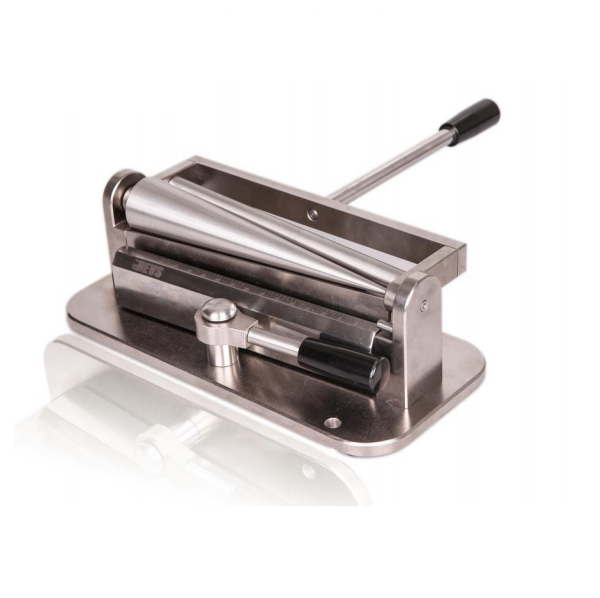
Conical mandrel designs are useful when a continuous range is preferred instead of separate rod diameters. A model such as the NOVOTEST BEND-6860 Bending Test Conical Mandrel illustrates this principle, allowing the operator to determine the approximate point where the coating begins to fail along a tapered form. For deformation-based evaluation, Erichsen cupping testers such as the NOVOTEST ShE-1 Erichsen Cupping Tester and NOVOTEST SE-1520 Erichsen Cupping Tester provide another way to assess coating ductility under controlled deformation.
Representative products and manufacturers
The range includes solutions from established suppliers such as TQCSheen, NOVOTEST, ELCOMETER, and Yasuda. Each brand supports different testing preferences, from compact manual bend fixtures to broader coating deformation assessment tools used in laboratory environments.
Examples in this category include the TQCSheen SP1820 Cylindrical Bend Test with 14 mandrels and the TQCSheen SP1822 Cylindrical Bend Test with 7 mandrels for controlled cylindrical bend evaluation. For rod-based flexibility checks, NOVOTEST offers models such as the BEND-H1519 and BEND-M1519, while the BEND-H1500 covers a larger rod range. Yasuda 514 and 514-TYPE1 Paint Film Bending Tester units also fit applications where consistent bend angle and defined mandrel sizes are required. The ELCOMETER 1506-B Bending tester Mandrel is another example for practical bend testing in coating inspection work.
How to choose the right coating mandrel bending tester
The right choice depends first on the test method your lab or quality team follows. If you need fixed-diameter comparison points, a cylindrical mandrel set is often the most direct option. If you want to determine failure over a continuous diameter range, a conical mandrel can be more suitable. If your process requires deformation by punch and die rather than simple bending, a cupping tester may better match the requirement.
It is also important to check specimen dimensions, coating thickness range, rod or mandrel size coverage, and how results will be interpreted in your workflow. Some applications need fine diameter steps for detailed coating comparison, while others only need a compact instrument for pass/fail checks. For users building a broader coating test setup, pairing bend evaluation with coating hardness testers can help distinguish between brittleness, surface resistance, and overall film performance.
Typical applications across industries
Mandrel bending and related deformation tests are relevant wherever coated metal or panel materials may be shaped during manufacturing or exposed to mechanical strain during service. Common use cases include paint and powder coating inspection, metal finishing, protective coating validation, incoming quality control of coated sheets, and laboratory comparison of coating formulations.
These testers are especially helpful in environments where a coating must maintain integrity after forming operations. A panel that performs well in thickness or appearance checks may still develop microcracks under bending. Identifying that behavior early can reduce rework, improve process control, and support more reliable product qualification.
Reading results in a practical way
A bend test result is most useful when it is interpreted in context. The visible onset of cracking, flaking, or detachment should be compared with the sample preparation method, substrate condition, and the specified acceptance criteria of the project or standard. The smallest successful bend diameter, or the deformation level reached before failure, becomes a practical indicator of coating flexibility.
For a more complete judgment of coating condition, many users also compare bend test findings with surface integrity checks such as holiday detection where relevant, especially in protective coating applications. This helps separate pure flexibility issues from discontinuities or film defects caused by other factors.
Building a more consistent coating test workflow
Consistency in sample preparation, operator technique, and result evaluation is just as important as the instrument itself. Using the correct panel size, matching the right mandrel range to the coating system, and documenting the failure point clearly will make comparative results more meaningful over time. This is particularly valuable for production QA, supplier qualification, and R&D work.
Within this category, buyers can find equipment suited to different levels of testing detail, from straightforward bend checks to more specialized deformation assessment. Whether the priority is routine inspection or deeper coating characterization, selecting the appropriate tester helps create a more dependable and technically relevant quality process.
If your goal is to evaluate how a coating behaves under bending or forming stress, this category provides practical options for laboratory and industrial use. Choosing by test method, specimen range, and reporting needs will usually lead to a better fit than choosing by brand name alone, especially when bend testing is part of a wider coating inspection program.
-
-
-
-
-
-
-
-
-
-
-
-
-
-
-
-
-
-
-
-
-
-
-
-