

Paint measuring and testing equipment
Reliable coating inspection starts long before a product reaches the end user. In manufacturing, metal finishing, maintenance, and protective coating work, accurate measurement helps teams control film build, verify adhesion, check surface condition, and reduce the risk of premature coating failure. This is why paint measuring and testing equipment remains an essential part of quality control across many industrial environments.
This category brings together instruments used to evaluate coating thickness, wet film application, adhesion performance, surface profile, and related inspection tasks. Whether the goal is incoming quality verification, in-process control, or final inspection, the right test method helps operators make better decisions with measurable and repeatable results.
Where these instruments are used
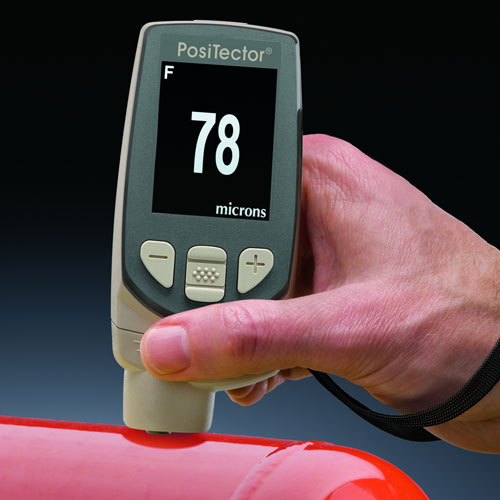
Paint and coating inspection tools are commonly used in fabrication shops, steel structure production, automotive components, marine maintenance, pipelines, general manufacturing, and laboratory environments. They support both protective and decorative coating systems, especially where coating thickness, adhesion, and surface preparation directly affect service life.
In practical terms, these devices help users confirm whether a coating has been applied at the correct stage and to the required build. They are also useful when comparing process consistency between batches, checking compliance with internal specifications, or investigating coating defects after application.
Typical measurement tasks in a coating control workflow
A complete inspection workflow often includes more than one instrument type. Before coating, users may evaluate substrate condition or surface profile. During application, they may verify wet film thickness to estimate final dry film build. After curing, dry film thickness and adhesion checks become especially important for acceptance testing.
Some projects also require accessories and reference items for calibration or method setup. For example, zero plates and test foils are frequently used to confirm gauge performance before measurement begins, while specialized tapes and blades support adhesion-related procedures in standardized coating tests.
Representative products in this category
Several products in this range illustrate how coating inspection systems are built in practice. For dry film measurement, the ELCOMETER A456CFNFBS coating thickness gauge and the ELCOMETER A456CFBS coating thickness gauge are typical examples used for routine measurement on ferrous or mixed ferrous/non-ferrous applications depending on configuration. Separate probes such as the ELCOMETER T456CF1S straight probe and ELCOMETER T456CF1R 90° ferrous probe are useful when geometry or access conditions make standard measurement more difficult.
For application-stage checks, the ELCOMETER B112----1B Hexagonal Wet Film Comb is a simple but practical tool for verifying wet film thickness across a broad range. When verification and setup are important, ELCOMETER T9999529 Zero Test Plates support zero checking, while items such as ELCOMETER T9999358-2 adhesive tapes and the ELCOMETER 107 Full Kit with ASTM Tape fit naturally into replica tape and related inspection workflows. For adhesion evaluation, cross hatch accessories such as ELCOMETER KT1542P001, KT1542P002, and KT1542P003 help match blade spacing to different coating thickness ranges.
How to choose the right paint testing equipment
The first step is to define what needs to be measured. Thickness measurement on metal substrates is different from adhesion testing or wet film verification, and each task may require a different principle or accessory set. Surface shape also matters: flat panels, pipes, curved parts, and recessed areas can influence probe selection and measurement access.
Users should also consider substrate type, expected coating range, inspection stage, and documentation requirements. A production line may prioritize speed and repeatability, while field inspection may require portable instruments with durable housings and simple calibration routines. If data transfer is important, models with digital output can simplify reporting and traceability.
Probe style is another practical factor. Straight probes are often suitable for general access, while angled probes can help reach tight spaces or awkward positions. For specific applications involving curved surfaces, dedicated probes such as the ELCOMETER T224C500UXARM convex surface profile probe may be more appropriate than a general-purpose setup.
Why calibration and accessories matter
In coating inspection, measurement reliability depends not only on the gauge itself but also on the condition of supporting accessories. Reference plates, calibration foils, replica tapes, and test blades all contribute to repeatable inspection results. Choosing the correct accessory for the method is often just as important as selecting the main instrument.
This is especially true in environments where multiple operators use the same device or where inspections are carried out across different substrates and coating systems. A clear setup routine with the right consumables helps reduce operator variation and improves confidence in the final reading.
Common manufacturer options in this segment
Different users prioritize different features, from portability and durability to advanced analysis methods. In this category, buyers often compare solutions from brands such as FISCHER, DEFELSKO, ElektroPhysik, and ELCOMETER depending on their required measurement principle and inspection workflow.
Some applications are straightforward and focus on routine thickness checking, while others require a broader coating test ecosystem that includes wet film tools, adhesion accessories, surface profile measurement, and reference materials. Reviewing the test method first usually makes brand comparison more meaningful than choosing by name alone.
Building a more effective coating quality process
Well-selected coating inspection equipment helps teams detect process drift early, reduce rework, and document coating quality more consistently. Instead of treating measurement as a final checkpoint only, many manufacturers and contractors use these tools throughout preparation, application, curing, and post-inspection stages.
That broader approach is often where the real value appears. A thickness gauge, wet film comb, adhesion accessory, or calibration plate may seem like a small part of the process, but together they form a practical system for controlling coating quality from start to finish.
Final considerations before selecting equipment
When comparing instruments in this category, it helps to start from the inspection method, the substrate, and the stage of production rather than from product names alone. A simple handheld gauge may be enough for routine checks, while more demanding environments may need interchangeable probes, calibration support, and accessories tailored to standardized test procedures.
By choosing equipment that matches the real inspection task, users can improve measurement consistency and make coating quality easier to manage over time. This category is designed to support that process with instruments and accessories suited to everyday industrial paint and coating evaluation.
Types of Paint measuring and testing equipment (1,929)
- Adhesion Tester (252)
- Coating / Plating Thickness Analyzer Xray (9)
- Coating Flaws Repair Equipment
- Coating Hardness Testers (67)
- Coating Mandrel Bending Testers (33)
- Coating Thickness Gage for Non-METAL (40)
- Coating thickness meter (573)
- Coating thickness meter Non contact (24)
- Grindometers (26)
- Holiday detector (66)
- Paint Applicator (549)
- Paint Dew Point Meter (34)
- Paint penetration testing and measuring equipment (5)
- Paint Surface Testing Equipment (90)
- Soluble Salt Tester (33)
- Standard plate for coating thickness gauge (66)
- Wet Film Gage (62)
-
-
-
-
-
-
-
-
-
-
-
-
-
-
-
-
-
-
-
-
-
-
-
-