


Grindometers
In paint, ink, and coating production, particle size and dispersion quality have a direct impact on appearance, gloss, hiding power, and surface smoothness. When coarse particles remain in the material, they can create defects that become visible during application or curing. That is why Grindometers are widely used as a practical tool for checking fineness of grind during formulation, production control, and laboratory evaluation.
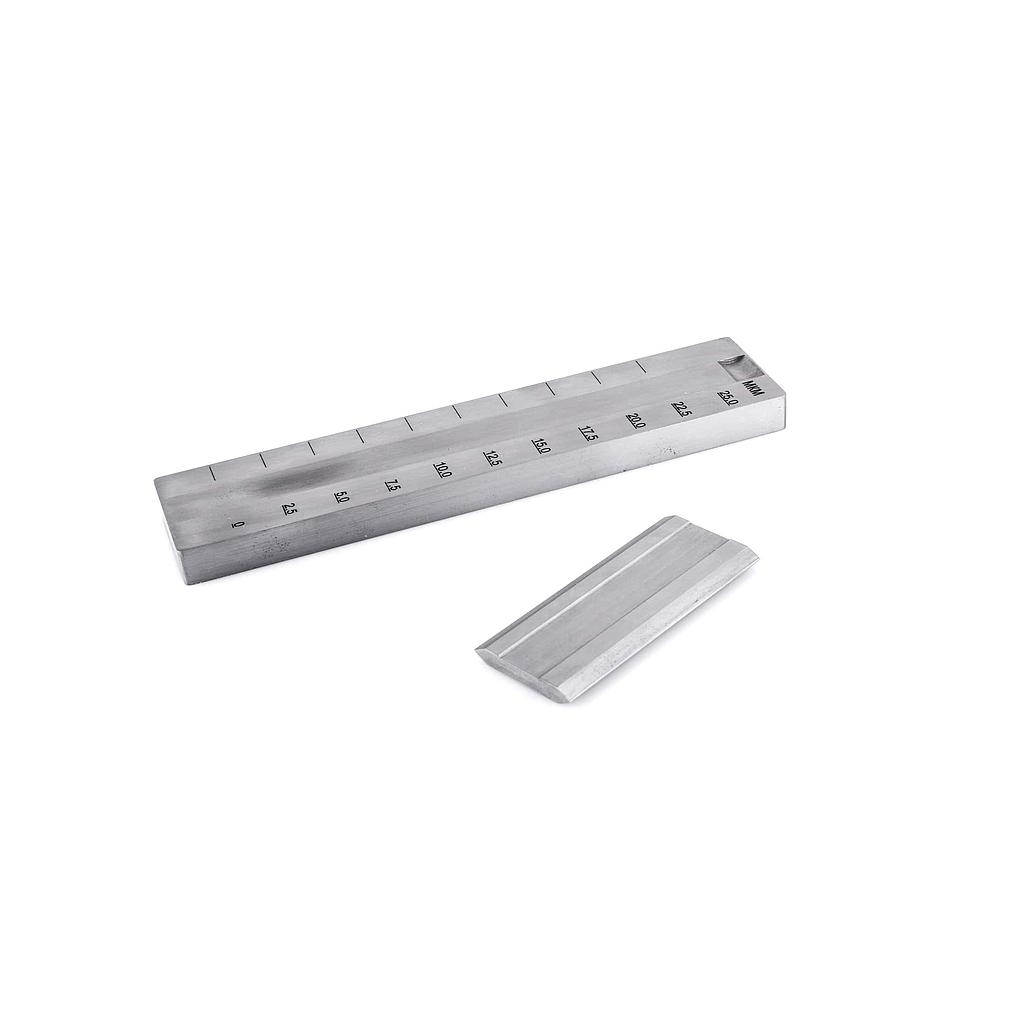
Why grindometers matter in coating and paint testing
A grindometer helps operators assess how well pigments or solid particles have been dispersed into a liquid medium. The test is simple in principle: material is drawn across a precision-grooved block, and the point where particles begin to appear indicates the fineness level. This makes the instrument especially useful for comparing batches, monitoring milling efficiency, and identifying whether additional dispersion is needed.
In many workflows, grindometers are not used in isolation. They are often part of a broader quality control process that also includes checks for film build, adhesion, and surface performance. For example, once dispersion quality is verified, users may continue testing with a coating thickness meter or review cured-film durability with coating hardness testers.
Typical applications for grindometers
These instruments are commonly used in industries where the consistency of dispersed materials affects final product quality. Paint and coating manufacturers use them to monitor pigment dispersion, while ink producers rely on them to control print performance and appearance. Similar checks are also relevant in laboratories working with pastes, dispersions, and other liquid systems containing fine solids.
The value of a grindometer lies in its speed and repeatability for routine inspection. It allows technicians to make a quick judgment without requiring a highly complex setup, which is useful during product development, incoming material verification, or in-process checks on the production floor.
How to choose the right grindometer
Selection usually starts with the measurement range that matches the materials being tested. Different formulations require different groove depths, so the appropriate range depends on the expected particle size and the control limits used in the process. Build quality, scale readability, and ease of cleaning are also important, especially in environments where frequent testing is required.
Another key factor is how the device fits into the wider inspection routine. If your process also includes evaluation of coating integrity or surface defects, it can be useful to review related tools such as an adhesion tester or a holiday detector. Choosing instruments with a clear role in the same quality workflow helps create a more efficient testing setup.
Representative product in this category
A notable example in this category is the NOVOTEST M-1524 Grindometer (0~150 µm). This model is suited to fineness testing where a broad range is needed for evaluating dispersion quality in coatings and similar materials. Its stated range up to 150 µm makes it relevant for practical checks during development and production control.
NOVOTEST is a recognized name in testing and measurement equipment, and this product illustrates the kind of straightforward, application-focused instrument many laboratories and industrial users look for. Rather than replacing broader analytical methods, a grindometer like this supports fast routine decisions and helps keep day-to-day quality checks consistent.
Where grindometers fit in the inspection workflow
Fineness of grind is only one part of coating evaluation, but it strongly influences downstream results. Poor dispersion can affect film uniformity, visual finish, and even the reliability of later tests. By checking material quality early, users can reduce wasted batches, avoid rework, and improve consistency before the coating is applied to a substrate.
In a practical workflow, grindometer readings are often followed by wet-film or dry-film measurement, then by cured-film performance testing. This sequence helps link raw material processing with final coating behavior, giving technicians a clearer understanding of how formulation and dispersion quality affect real-world results.
Good practice for reliable grindometer use
To obtain meaningful results, the test surface should be clean and the sample should be representative of the batch. The material is typically placed at the deep end of the groove and drawn steadily across the scale using the appropriate scraper edge. Consistent sample handling is essential, because technique can influence the visibility of coarse particles and the repeatability of the reading.
It is also important to interpret the result in the context of the product being tested. A fineness value should be compared against the specification or process standard for that material, rather than viewed as a standalone number. This makes the grindometer a practical control tool for both development work and routine production release.
Finding the right option for your process
The right grindometer depends on the materials you handle, the level of process control required, and how the instrument will be used alongside other coating test equipment. For routine factory checks, ease of use and durability may be the priority. For laboratory work, scale selection and compatibility with different formulation types may carry more weight.
This category is intended for users who need a dependable way to evaluate dispersion quality in paints, inks, and related materials. By choosing a suitable grindometer and using it as part of a structured testing workflow, it becomes easier to maintain stable quality, identify process deviations early, and support more consistent coating performance.
-
-
-
-
-
-
-
-
-
-
-
-
-
-
-
-
-
-
-
-
-
-
-
-