

Wet Film Gage
Controlling coating thickness before curing is one of the simplest ways to reduce rework, improve finish consistency, and avoid downstream quality issues. In painting, protective coating, and industrial finishing workflows, a Wet Film Gage helps operators verify whether the applied layer is within the intended range while the coating is still fresh.
This category focuses on practical tools used for immediate wet film measurement during application. These instruments are widely used in paint shops, coating inspection, corrosion protection, and process control environments where coating build needs to be checked quickly and repeatably.
Why wet film measurement matters in coating work
Measuring the coating at the wet stage gives users an early checkpoint before the film dries and defects become expensive to correct. It supports better control over material consumption, helps maintain target dry film expectations, and reduces the risk of under-application or excessive build.
In many coating processes, wet film control is part of a broader inspection routine. After application, users may also review cured thickness with a coating thickness meter, especially when final verification is required on production parts, structures, or finished surfaces.
Common wet film gage types in this category
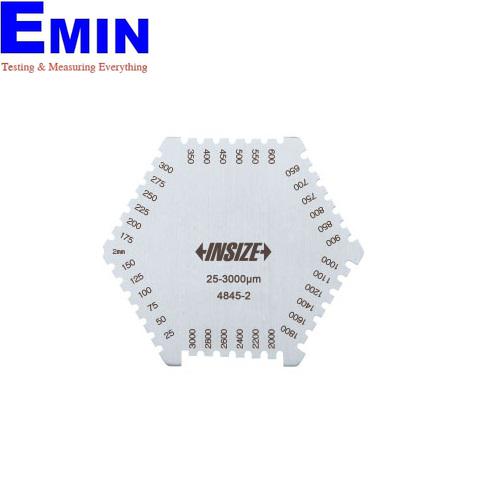
This range mainly includes wet film combs and wet film wheels, each suited to slightly different inspection habits and surface conditions. Combs are widely used for quick spot checks, while wheel-based designs are often chosen when a rolling contact method is preferred.
Hexagonal comb designs offer multiple measurement steps in a compact format, making them useful for routine checks across a wide coating range. Long-edge combs are also common where users want a straightforward reading method with clearly defined step increments. Wet film wheels, together with a dedicated handle, can be practical for more controlled measurement over coated surfaces.
Representative products and measurement ranges
Several models in this category illustrate the breadth of available measuring ranges. For example, the ELCOMETER B112 Hexagonal Wet Film Comb covers 25 to 3000µm, making it relevant for applications where thicker wet coatings may need to be checked during application. The ELCOMETER 3236 Hexagonal Wet Film Comb series is available in versions such as 25 to 2000µm and 1 to 80 mils, which helps users match the measuring format to their preferred unit system.
For finer step resolution in narrower bands, the ELCOMETER 3238 Long Edge Wet Film Comb series includes variants such as 5 to 120µm, 25 to 600µm, and 50 to 1200µm. This makes the category useful not only for general coating work but also for jobs where measurement resolution and a defined reading interval are important. For wheel-based measurement, examples include ELCOMETER wet film wheels in ranges such as 0 to 300µm and 0 to 500µm, with the related handle supplied as a supporting accessory in the measurement setup.
How to choose the right wet film gage
The first selection point is the expected wet coating range. A gage should comfortably cover the target thickness without forcing the user to work too close to the upper or lower limit of the scale. If your process uses thin coatings, a model with smaller step intervals can support more precise checks; if thicker protective systems are involved, a wider-range comb may be more suitable.
The second factor is how the measurement will be performed in practice. Flat panels, curved parts, production lines, and field-applied coatings do not always call for the same tool style. Users should also think about unit preference, such as µm or mils, and whether a compact disposable-style comb or a wheel-based solution fits the inspection routine better.
Where these gages fit in the inspection workflow
A wet film gage is typically used immediately after coating application, when the film is still fresh enough for direct contact measurement. This allows operators, inspectors, or applicators to adjust spray settings, application speed, or coating technique before too much product is applied out of tolerance.
Wet film checking is only one part of a complete coating quality process. Depending on the specification, users may also evaluate cured film performance through tests related to adhesion, surface durability, or defect detection. For some coating systems, complementary checks with coating hardness testers may be relevant after curing and conditioning.
Key advantages of comb and wheel designs
Comb-style tools are valued for their speed, simplicity, and ease of carrying into the field. They are often used for fast validation on freshly coated areas and can be a practical option for inspectors who need clear pass/fail style readings against a target range. Their lightweight format also makes them suitable for routine use across multiple jobs.
Wheel-style tools can offer a different handling experience, especially where a rolling contact method is preferred. When paired with the correct handle, they can support controlled movement across the coating surface and may be useful in inspection routines that benefit from consistent contact geometry. In both cases, the goal remains the same: obtaining a reliable wet film thickness indication before curing.
Manufacturer context and product ecosystem
This category prominently features solutions from ELCOMETER, a recognized name in coating inspection and paint testing equipment. The available product mix shows a practical spread of comb and wheel formats, covering both metric and imperial measurement approaches and a wide span of coating thickness ranges.
For buyers comparing broader coating inspection options, some applications may also involve instruments from BYK depending on the test method and workflow requirements. In many industrial environments, wet film measurement is selected alongside other inspection tools rather than as a standalone purchase, so category-level compatibility and process fit are often just as important as the individual gage style.
What to consider before ordering
Before selecting a model, confirm the target wet film range, the preferred reading unit, and the surface type being coated. It is also useful to check whether your team needs a simple comb for quick spot checks or a wheel and handle arrangement for a different measurement approach. Where multiple coating systems are used, choosing more than one range can make day-to-day inspection more efficient.
A well-matched wet film gage supports better process control at the point of application, which is where many coating problems can still be corrected quickly. If you are building out a full inspection workflow, this category is a strong starting point for improving consistency, reducing waste, and supporting more reliable coating quality from application through final verification.
-
-
-
-
-
-
-
-
-
-
-
-
-
-
-
-
-
-
-
-
-
-
-
-